
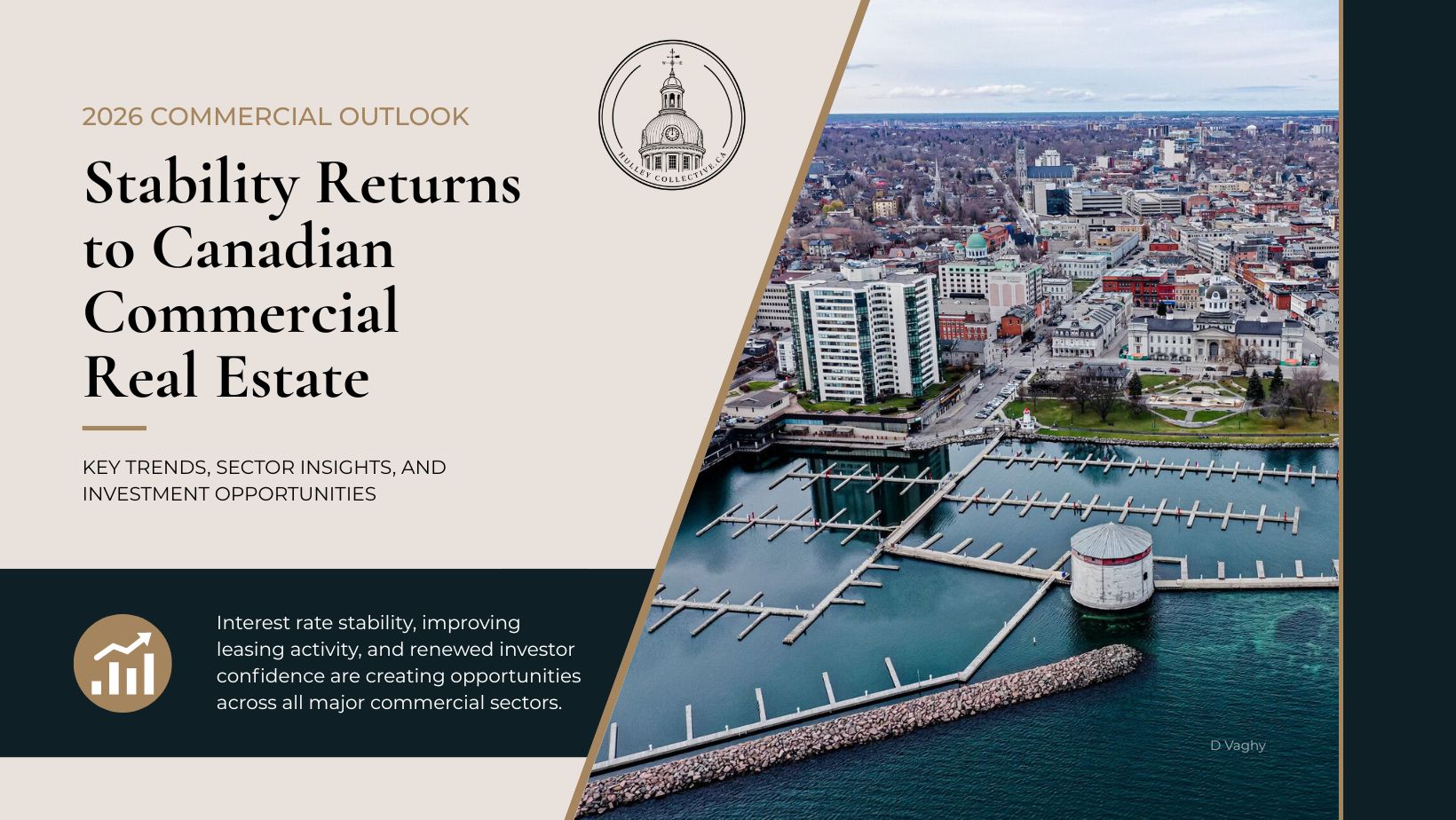
Stability Returns to Canada’s Commercial Real Estate Market in 2026
After several years of uncertainty driven by rising interest rates, inflationary pressures, and cautious investor sentiment, Canada’s commercial real estate market is showing clear signs of stabilization.
According to RE/MAX Canada’s latest Commercial Real Estate Report, investors are returning to the market with renewed confidence as interest rates have stabilized and pricing expectations between buyers and sellers continue to align. Rather than speculative acquisitions, today’s market is being driven by disciplined investors targeting quality assets with strong cash flow and long-term fundamentals.
The result is a commercial market that looks increasingly focused on fundamentals, income generation, and long-term value creation.
Industrial Continues to Lead
Industrial real estate remains one of Canada’s strongest-performing asset classes. Demand for warehousing, logistics facilities, and light industrial space continues to outpace supply in many markets, particularly for smaller and mid-sized facilities with strong transportation access.
Businesses continue to prioritize operational efficiency and supply chain resilience, supporting healthy leasing activity across the sector.
Retail Has Proven More Resilient Than Expected
Necessity-based retail has emerged as one of the most stable segments of the commercial market.
Neighbourhood shopping centres, service-based retail, grocery-anchored developments, and essential consumer services continue to attract both tenants and investors. While e-commerce continues to influence shopping habits, well-positioned retail properties remain in demand across many Canadian markets.
The Office Sector Is Finding Its Footing
While office real estate continues to evolve, there are encouraging signs of recovery.
Premium office buildings offering modern amenities, efficient floorplates, and desirable locations are benefiting from renewed leasing activity as organizations refine return-to-office strategies. The market has increasingly become a “flight-to-quality” environment where the best assets continue to attract tenants.
Multi-Family Remains a Long-Term Favourite
Canada’s ongoing housing shortage continues to support strong fundamentals within the multi-family sector.
Population growth, affordability challenges, and increasing rental demand continue to make apartment and purpose-built rental developments attractive to both private and institutional investors. In many markets, multi-family assets remain among the most sought-after commercial investments available.
What This Means for Investors
The commercial real estate market of 2026 is not defined by speculation. It is increasingly being shaped by careful underwriting, quality assets, stable income streams, and long-term planning.
For investors, developers, landlords, and business owners, this environment may present opportunities that were difficult to identify during the uncertainty of recent years.
Whether you’re evaluating development land, commercial leasing opportunities, investment properties, or acquisition strategies, understanding local market conditions remains critical to making informed decisions.
Looking Ahead
Commercial real estate is entering a new phase. Capital is returning, leasing activity is improving, and investors are focusing on assets that can deliver consistent performance through changing economic cycles.
For those prepared to act strategically, 2026 may represent one of the most balanced commercial real estate environments Canada has seen in several years.
Connect With Hulley Collective
Patrick Hulley specializes in commercial real estate sales, leasing, development land, and project marketing throughout Eastern Ontario. If you’re considering a commercial acquisition, disposition, leasing assignment, or development opportunity, connect with Hulley Collective to discuss your objectives and evaluate current market opportunities.